Background screening has always been a snapshot. A check is run, data is pulled from multiple sources, and a result is delivered to support a decision. That structure still defines how the system works today because it matches how people decisions are made: at a specific point in time, not as an ongoing process.
For years, we've heard that screening should become more continuous. Some people in the industry believe it. Others have tried, but it never took hold. The harder question is why so little about the underlying system has actually changed.
What a Check Actually Captures
A background check reflects what's true the moment it's run. It draws on systems that operate independently of one another, on different timelines and under different rules. As a result, an employee can remain in a role after a professional license has lapsed, a compliance issue can go undetected until the next check, and an insurance risk profile can go months without reflecting a person's recent behavior. The check was correct when it was delivered. It simply doesn't account for what happens after.
Once a decision is made, the underlying data keeps changing, but the result attached to that decision doesn't. A professional license may be updated after hire and only appear in a later reporting cycle. A compliance event may occur but not surface until the next time data is pulled. A court record may change days or weeks after the underlying event, depending on how that jurisdiction processes filings. Nothing in most systems connects those updates back to the original decision once the report has been delivered.
The challenge isn't simply that records change, it's that businesses don't make decisions about records. They make decisions about people. Individual records can each be accurate but still fail to describe the current state of the person those decisions are being made about.
Why Monitoring Doesn't Just Bolt On
That gap is what monitoring is intended to close, but the system underneath background screening was never designed to support it.
Screening is structured around discrete requests: initiate a check, retrieve data, deliver a report, move to the next one. Once that cycle ends, the relationship with the underlying data ends as well. Monitoring requires something fundamentally different: persistent connections to data sources that continue to change long after the original decision has been made.
Adding more sources doesn't solve that problem. It simply creates more disconnected information that has to be connected, governed, and maintained over time. Solving it requires infrastructure that can continuously connect thousands of independent systems, normalize what they report, and maintain those connections as the systems themselves evolve.
Compliance has to operate inside that same infrastructure. Data-handling requirements vary across jurisdictions and apply across the entire lifecycle of how information is accessed, stored, and used over time, not just at the moment it's retrieved. Governance can't be layered on afterward. It has to be built into the system itself.
The commercial model reinforces the same constraint. Most of the industry sells by the search, with pricing and compensation built around transaction volume. Moving to ongoing visibility isn't a packaging change. It requires different incentives, a different sales motion, and a different operating model.
The Gap Nobody's Solved
Even if those technical and commercial challenges are addressed, another question remains.
When monitoring works as intended, it eventually surfaces something—not during an initial evaluation, but after an organization has already decided to trust someone. At that point, most organizations don't have a clear answer for what happens next: who owns that decision, what process applies, or what the appropriate response should be. That ambiguity has slowed adoption just as much as the technology itself.
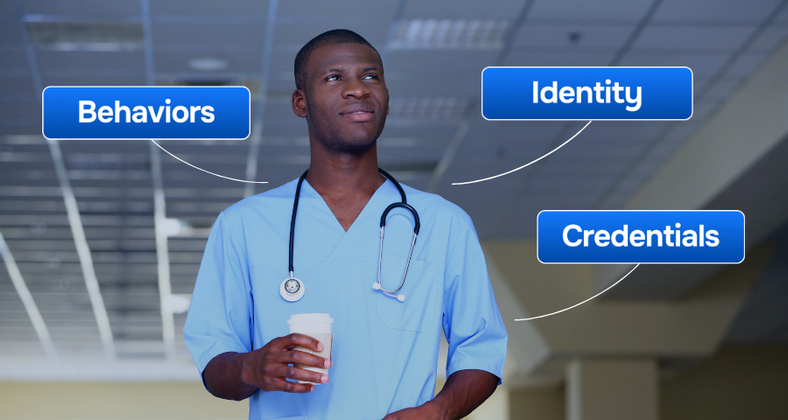
Looking beyond point-in-time screening also changes how risk is interpreted. A single record may suggest one level of risk. Viewed alongside identity, credentials, and the pattern of behavior that follows, it can suggest something very different—sometimes more risk, sometimes less. That distinction matters in areas like second-chance hiring, where understanding the whole person leads to a better decision than evaluating one record in isolation.
Not a Patch. A Different Foundation.
None of this is solved by running checks more often. The system has to answer a different question than the one it was built to answer.
Businesses need reliable access to verifiable people data, not just individual records. That means maintaining the connections, governance, and compliance required to understand how information changes over time, rather than recreating that work every time a decision is made. It requires a network, not simply a larger database. It also requires a commercial model built around ongoing relationships instead of transactions, and a clear answer for what happens when monitoring surfaces something, not after the fact.
That's why I see our recent recognition as one of the country's leading workplace technology companies differently from many awards. To me, it isn't recognition for a single product or feature, but of the infrastructure required to solve a problem our industry has understood for years but hasn't yet addressed.
A background check will always describe what was true when it was run. It's never going to describe what's true now. That isn't an extension of screening. It's a different model.